

Smooth Shank, and Spiral, and Ring Shank Oh My… choosing the right nails for your project
Aug 21st 2026
Not all nails are created equal, and the shank style can make a big difference in how well a nail performs for a specific project. In this article, we’ll take a closer look at smooth, spiral and ring shank nails, explain how each one works, and help you determine which style is best for your next project.
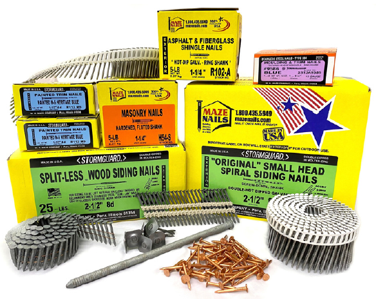
A nail is a nail, right? It has a head on one end and a point on the other. So why are there so many different options?
As you dive deeper into the art of nail production and, more importantly, how nails are used, one of the first things you may notice is the shank style. Smooth, ring, spiral, fluted, barbed, annular and more can leave you scratching your head when trying to figure out which nail you need, and why.
The good news is that choosing the right shank doesn't have to be complicated.
When deciding which shank style is best for your project, there are a few important factors to consider: Are you securing material on a lateral or horizontal plane? What type of material are you fastening? And, as silly as it sounds, will you need to remove the nails at some point?
Let's take a look at three of the most common shank styles: smooth, spiral and ring shank.
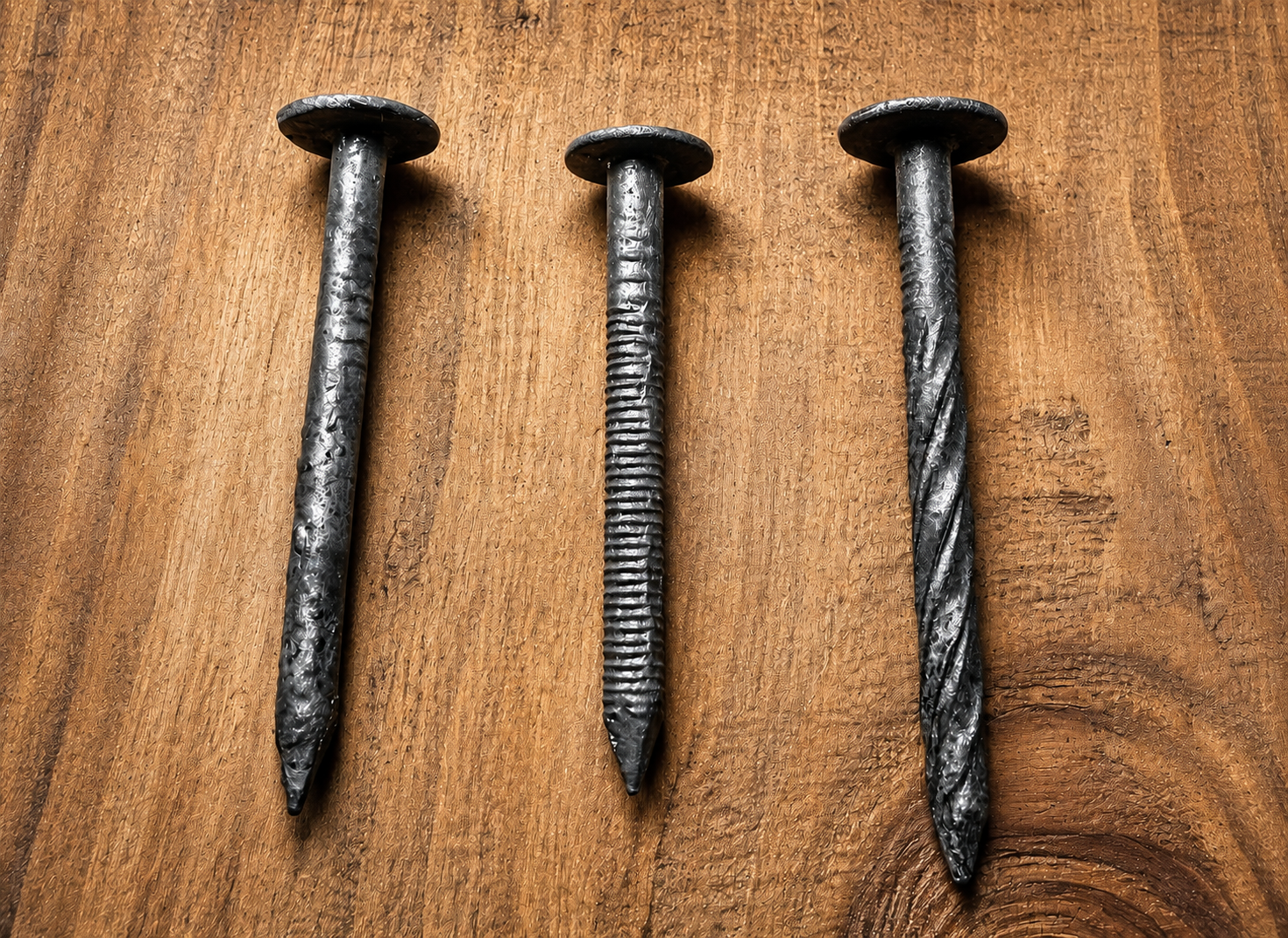
What is a Smooth Shank Nail? When Shear Strength Matters
When nailing material where lateral movement or racking is a concern, smooth shank nails are often the best choice.
Why? It comes down to the construction of the nail itself. A smooth shank doesn't have grooves, rings or other features cut into the shank. That means the nail maintains a consistent diameter and provides excellent steel strength throughout the shank.
Smooth shank nails are a great choice for general indoor framing, temporary construction projects where nails may need to be removed, and applications where the assembly needs to withstand lateral movement or racking.
They're also typically easier to remove than ring or spiral shank nails, which can be an important consideration when you're working on a temporary structure or project that may need to be disassembled later.
Bottom line: If you need a strong nail with good shear performance and easier removal, smooth shank is a great place to start.
What Is a Spiral Shank? More Holding Power with a Twist
Looking for greater holding power, especially when driving nails into dense material or hardwood? A spiral shank nail may be just what you need.
The spiral shank was designed by Maze Nails in the 1930s to increase holding power and help prevent nails from backing out of the material.
Unlike a ring shank nail, a spiral shank nail actually rotates, or twists as it is driven, working its way into the material in a way that's similar to a wood screw.
That twisting action makes spiral shank nails an excellent option for applications such as hardwood flooring and wood pallet construction, where you want a strong hold but splitting can be a concern.
Bottom line: Spiral shank nails provide increased holding power while their twisting action can help them drive into dense materials.
What Is a Ring Shank? Maximum Holding Power For Many Projects
If you're looking for serious holding power, look no further than the ring shank nail.
As the name suggests, ring shank nails feature a series of closely spaced rings around the nail's shank. Unlike a spiral shank nail, a ring shank nail does not rotate as it is driven.
Instead, as the nail enters the wood, the wood fibers are forced around and between the rings along the shank. Those rings create mechanical resistance that makes the nail much more difficult to pull back out.
That's why ring shank nails are ideal for projects where you want your materials to stay securely in place for the long term.
Common applications include roofing, siding and trim, among many others.
If you're building in an area that experiences high winds or significant seasonal and cyclical weather changes, the additional holding power of a ring shank nail can provide an extra level of confidence that your materials will stay where you put them. We aren’t the only ones that notice the holding power, Maze Nails STORMGUARD™ roofing nails are both Miami Dade County approved, and Fortified Building System certified.
Bottom line: When maximum withdrawal resistance and long-term holding power are the priority, ring shank is hard to beat.
Which Nail Shank Has the Most Holding Power?
The answer depends on what you're building and what you need the nail to do.
We put it to the test.
So how do these different shank styles actually compare?
At Maze Nails we ran the tests. We looked at 3 similar nails, an R102 smooth shank, R102A ring shank, and R103-S spiral shank, you can see that ring shank nails are superior when it comes to holding power no matter what the substrate is.
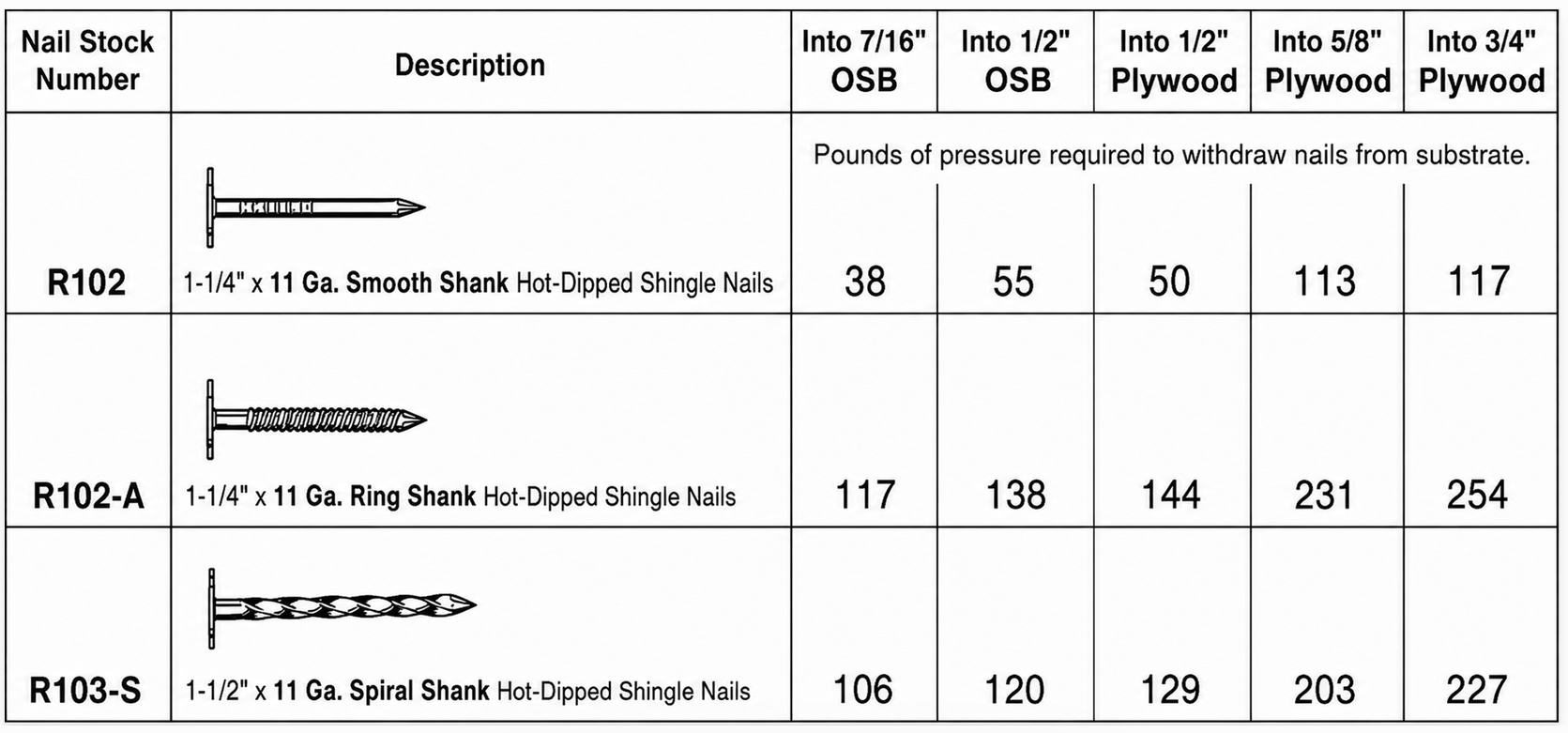
While the differences between shank styles may seem small when looking at the nails themselves, those differences can have a big impact once the nail is driven into the material.
Which Nail Shank Should I Use?
When you're planning a building project, nails may not be the first thing on your mind. But choosing the right nail can make a real difference in the long-term performance of your project.
Whether you need the shear strength of a smooth shank, the penetrating power of a spiral shank or the maximum holding power of a ring shank, using a quality nail designed for the application is an important part of building it right.
At Maze Nails, we've been making nails in the USA for generations, with a focus on quality, performance and products designed to get the job done right.
Have questions about which nail is right for your application? Visit our product page and do a side by side comparison the many options we have available for your next project. Our knowledgeable and friendly customer service team is always here to help as well!
Give us a call at 800-435-5949 and let us help you find the right Maze Nail for your next project.