

How to Choose the Right Nail for Cedar, Redwood, and Pressure-Treated Lumber
Oct 26th 2026
Have you ever walked into your local lumberyard or hardware store and wondered why the heck there are so many options in the nail aisle? Why can't you just use a regular bright framing nail for every application? After all, a nail is a nail, right? Point on one end, head on the other. Well, not exactly!
When it comes to fastening cedar, redwood, or pressure-treated lumber, the nail you choose can make a big difference in how your project looks and how long it lasts. Nail material, coating, diameter, shank style, and even the point design all play a role in getting the job done right.
So before you grab the first box of nails off the shelf, let's take a look at why these materials require a little extra consideration and how choosing the right nail can save you some headaches down the road.
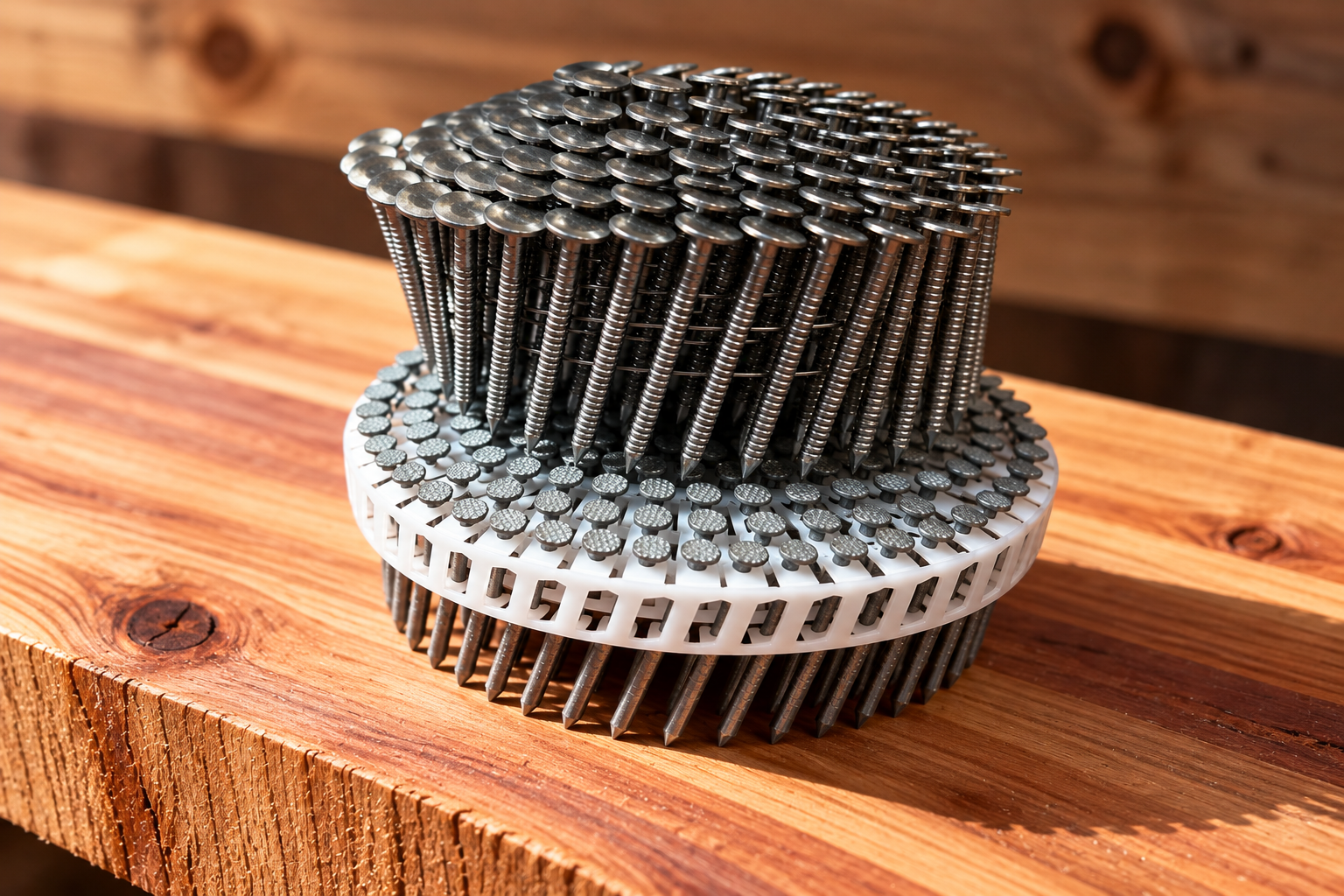
Why Do Cedar and Redwood Need Special Nails?
Before we start talking about nails, we need to talk about the wood you're putting them into. Cedar and redwood have been popular building materials for generations, and for good reason! Both are naturally resistant to rot and decay, making them excellent choices for siding, shingles, shakes, trim, and other outdoor projects.
Part of that natural protection comes from compounds found in the wood, including tannins and other extractives. These help contribute to the wood's durability, but they can also create some challenges when it comes to choosing the right fastener.
Why Do Nails Cause Black Streaks on Cedar and Redwood?
Here's where things get interesting. Those same natural tannins that help make cedar and redwood such great building materials can also react with metal when moisture is present.
The result? Those ugly black streaks you sometimes see running down cedar siding.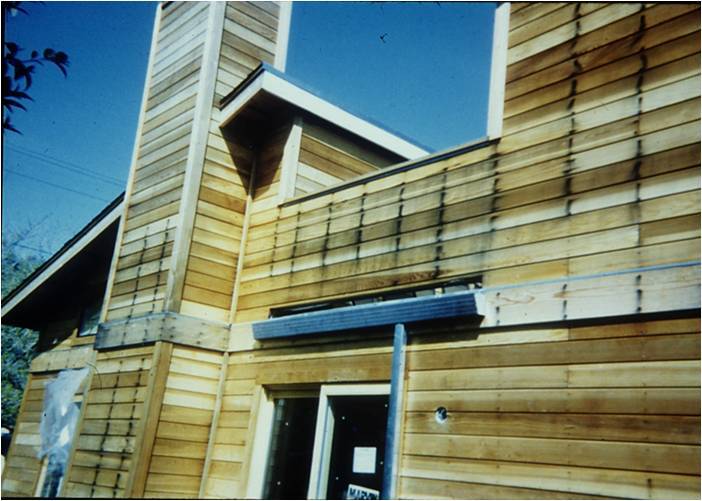
Let's face it, if you're spending $20,000 or more on beautiful, natural cedar siding, you want the finished project to look like the vision you were sold, not like a zebra! (See picture to the right.)
When an unprotected nail is exposed to moisture, corrosion and reactions between iron and the wood's natural compounds can cause dark discoloration around the nail head and streaking down the surface.
And while the staining is certainly an eyesore, corrosion can also affect the long-term performance of the fastener itself.
That's why choosing a corrosion-resistant nail is so important when working with these materials.
What Are the Best Nails for Cedar and Redwood?
When fastening cedar or redwood, stainless steel and properly hot-dipped galvanized nails are two common options worth considering. But before you assume they're interchangeable, there are a few things you should know.
Stainless Steel Nails: Keeping the Rust and Stains Away
If you're looking for excellent corrosion resistance, stainless steel nails are a great place to start. Maze Nails offers both Type 304 and Type 316 stainless steel nails, but what's the difference?
Type 304 stainless steel is a popular option for many exterior applications, providing good corrosion resistance and helping reduce the risk of staining on cedar and redwood.
Type 316 stainless steel takes that corrosion resistance a step further, making it especially useful in more demanding environments, including coastal areas where salt exposure can be a concern.
Think about it this way: if you're installing beautiful cedar siding on a house near the ocean, you probably don't want to find out a few years later that you should have spent a little more time choosing the right fastener.
The correct stainless steel grade will depend on the application, exposure, and any manufacturer or building-code requirements.
Double Hot-Dipped Galvanized Nails: Not All Galvanized Nails Are Created Equal
You've probably seen the word galvanized on a box of nails before. But did you know that not all galvanized nails offer the same level of protection?
Galvanizing is the process of applying a protective zinc coating to steel to help resist corrosion. The type of galvanizing process and the thickness of that coating can make a big difference in how the nail performs over time.
Maze Nails' STORMGUARD® double hot-dipped galvanized nails are designed to provide corrosion protection for demanding applications.
But here's the important part: just because a nail says galvanized doesn't mean it's automatically the right choice for every cedar or redwood project.
For example, the Cedar Shake & Shingle Bureau specifies certain fastener materials and coating requirements for cedar roofing applications. Depending on the application and environment, properly hot-dipped galvanized nails meeting the required specification or stainless steel nails may be acceptable.
And in certain coastal environments, Type 316 stainless steel is required.
The nails we have here at Maze meet all those requirements from the Cedar Shake & Shingle Bureau!
So before you grab that box of galvanized nails, make sure the coating and material meet the requirements of the wood product you're installing.
Does the Finish on your siding project matter?
Here's one more thing to consider when choosing the right nail for your cedar siding. How do you plan to finish it? If you're planning to leave your cedar natural, without stain or paint, stainless steel nails are highly recommended. After all, the last thing you want is unsightly staining on that beautiful natural wood!
But what if you're planning to use a solid-color stain or paint? That's where double hot-dipped galvanized nails can be a great option. When properly matched to the application, these nails have a long history of providing decades of service, often at a considerable cost savings compared to stainless steel.
So before you spend the extra money on stainless steel nails, take a minute to consider how your siding will be finished. You may find that a quality double hot-dipped galvanized nail is just what you need! Of course, always check the siding manufacturer's fastener requirements, especially in coastal or other highly corrosive environments.
Why Nail Diameter and Point Design Matter for Cedar and Redwood
Now that we've covered the material and coating, let's talk about the actual design of the nail. You might think a bigger, thicker nail means a stronger connection, right? Not necessarily! Cedar and redwood can be prone to splitting, especially near the ends and edges of boards or when working with thinner materials like shingles and shakes.
Drive an oversized nail into the wrong spot, and you may end up with two pieces of wood where you originally had one. Not exactly the result you were hoping for! That's where choosing the right shank diameter and nail point comes into play.
A properly sized shank and a point designed for split-prone woods can help reduce the likelihood of splitting while still providing the holding power needed for the application. Maze Nails offers specialty nails with slim shanks and blunt point designs intended to help minimize splitting in cedar, redwood, and other wood products.
And don't forget about the shank style itself! Smooth, spiral, and ring shank nails all have different characteristics when it comes to holding power and withdrawal resistance. If you want to learn more about those differences, check out our article on choosing between smooth, spiral, and ring shank nails.
What Nails Should You Use for Cedar Shakes and Shingles?
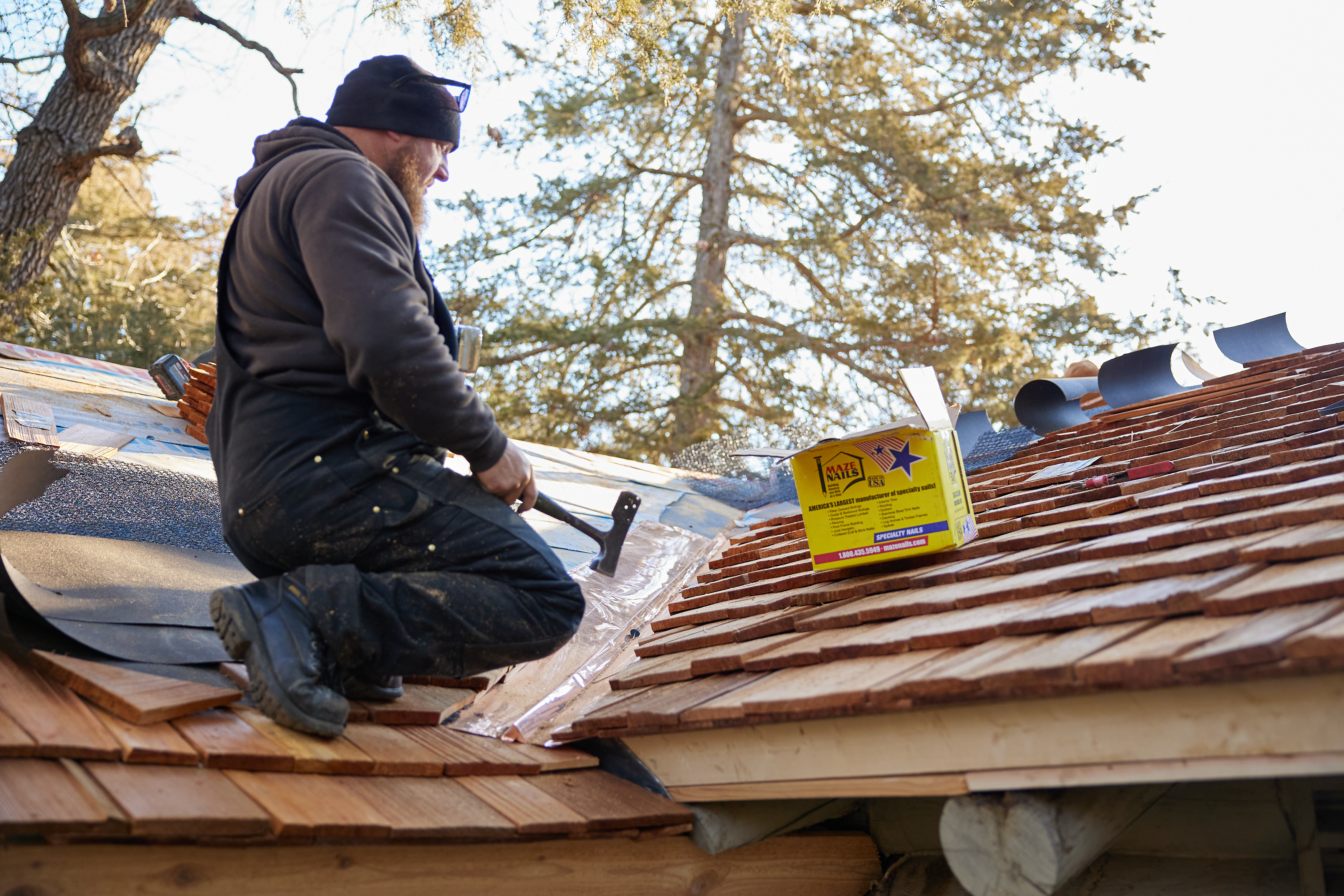
Cedar shakes and shingles deserve a little extra attention because they're often installed in some pretty demanding environments. Think about everything your roof goes through in a year. Rain, snow, wind, sunshine, freezing temperatures, and everything in between.
Now imagine going through all that trouble to install a beautiful cedar roof, only to have the wrong fasteners become the weak link. That's why the Cedar Shake & Shingle Bureau (CSSB) provides specific guidelines for the fasteners used in cedar shake and shingle applications. These requirements address things like nail material, corrosion resistance, length, and installation practices.
For roofing applications, the CSSB identifies suitable stainless steel and hot-dipped galvanized fasteners under specified conditions, with Type 316 stainless steel required within 15 miles of salt water. Certain treated cedar products also require Type 316 stainless steel.
Maze Nails manufactures cedar shake and shingle nails in materials and designs intended for these demanding applications, including stainless steel and STORMGUARD® double hot-dipped galvanized options.
The important thing is to make sure the specific nail you're using meets the requirements for the cedar product and installation conditions. Because when you're putting a roof on a building, the last thing you want to worry about is whether you used the right nails! If you have other Cedar application specific questions make sure you visit the Cedar Shake & Shingle Bureau website, they are the authority in all things cedar!
What About Pressure-Treated Lumber?
So far, we've talked about cedar and redwood, which have natural properties that help protect them against decay. But what about pressure-treated lumber? Pressure-treated wood is commonly used for decks, fences, landscaping, outdoor structures, and other projects where resistance to rot and insects is important.
Unlike cedar and redwood, pressure-treated lumber gets much of that protection from preservatives introduced into the wood during the treatment process. Sounds great, right? Wood designed to resist rot and decay so your project lasts longer. Well, here's the catch. Some of those same preservatives that protect the wood can be pretty tough on the nails holding it together. Seems a little backward, doesn't it? You're using treated lumber to make your project last longer, but the wrong nail could end up being the weak link!
What Happens If You Use the Wrong Nails in Pressure-Treated Wood?
Certain wood preservatives can accelerate corrosion when they're in contact with incompatible metals, especially in the presence of moisture. Over time, that corrosion can eat away at the fastener, reducing its strength and potentially compromising the connection. And we're not just talking about a little rust on the nail head. In severe cases, corrosion can weaken the fastener enough to affect the long-term performance of the project. That's not something you want happening to your deck, fence, or other outdoor structure.
What Are the Best Nails for Pressure-Treated Lumber?
For many pressure-treated wood applications, appropriately rated hot-dipped galvanized nails or compatible stainless steel nails are good options.
But there's an important distinction here: not all pressure-treated lumber is treated with the same preservatives, and not every nail coating is compatible with every treatment. The type of preservative, exposure to moisture, and installation requirements all play a role in determining which nail is appropriate.
For example, Type 304 stainless steel may be suitable for certain applications, while specific treated products or highly corrosive environments may call for Type 316. Likewise, hot-dipped galvanized nails must meet the applicable coating requirements for the treatment and application.
The best place to start? Check the tag on your treated lumber. Manufacturers typically provide fastener compatibility recommendations based on the treatment used. It may seem like one more thing to think about, but spending a few minutes choosing the right nail is a whole lot easier than replacing corroded fasteners down the road.
Don't Forget About Nail Length and Holding Power
By now, we've covered nail material, coating, diameter, and point design. You'd think we'd be done, right? Not quite!
The length of the nail and how deeply it penetrates the material you're fastening to are also important. A nail that's too short may not provide the holding power you need, while an unnecessarily long or oversized nail can create other problems.
For many common wood-fastening applications, approximately 1¼ inches of penetration into the receiving material is a useful general guideline. However, roofing, siding, structural connections, and specialty products may have different requirements, so always follow the applicable installation specifications.
And if you're wondering what the heck a 6d or 8d nail has to do with its actual length, we've got you covered there, too! Check out our article, “A Penny for Your Thoughts… or Your Nails?”, to learn more about traditional nail sizes and penny designations.
Maze Nails Has the Right Nail for Your Project
At this point, you might be thinking, “Great, now I need to consider the wood, nail material, coating, diameter, point, shank style, and length just to pick out a box of nails?”
Well, yes. But the good news is that you don't have to figure it all out on your own.
At Maze Nails, we've been manufacturing quality nails in the USA for generations, including products designed specifically for cedar, redwood, and appropriate pressure-treated lumber applications.
Whether you're installing cedar shakes, redwood siding, or building an outdoor project with treated lumber, we offer a variety of nails designed to meet different fastening needs. Our lineup includes stainless steel siding and roofing nails, STORMGUARD® double hot-dipped galvanized nails, and specialty nails designed to help reduce splitting in wood products.
The key is choosing the product that matches your particular application and installation requirements. And if you're not sure which nail you need, that's what we're here for!
The Right Nail Makes All the Difference
When you're planning your next project, nails may not be the first thing on your mind. But as we've covered, there's a lot more to choosing the right nail than simply finding one that's long enough to hold two pieces of wood together.
From preventing unsightly staining on cedar and redwood to protecting against corrosion in pressure-treated lumber, the right nail can make a real difference in how your project looks and performs for years to come.
At Maze Nails, we're proud to manufacture quality nails designed to help you get the job done right.
Have questions about which nail is best for your next project? Our knowledgeable and friendly customer service team is here to help.
Give us a call at 1-800-435-5949.
After all, choosing the right nail shouldn't have to be the hardest part of your project!